Did you know that by July 2023, 68,000 people had looked into the mix of AI art and human artists? This number shows how much people are curious about tech and creativity. With AI making digital art that’s as good as human art, we wonder: who really touches our hearts and minds?
In a world where algorithms play a big role, the fight over AI art’s value and human touch is getting more exciting. It’s a debate that goes to the heart of what art means to us.
We’re going to look closely at this rivalry. We’ll see how AI art stacks up against human creativity. This will help us understand how each kind of art connects with us.
Key Takeaways
- The interest in AI-generated art has surged, as reflected in significant online engagement.
- AI art generators like DALL-E 2 and Midjourney are at the forefront of technological creativity.
- There’s a clear preference for human-created art in emotional and aesthetic evaluations.
- Participants’ biases against AI art can change based on perceived effort seen in creation processes.
- Debates persist around copyright eligibility for AI-generated works.
- The blending of AI and human creativity opens new possibilities in the art landscape.
The Rise of AI-generated Art
AI-generated art is changing the creative world. New tools are making art in ways we never thought possible. These tools use deep learning to create images that are as good as traditional art.
Understanding AI and its capabilities in Art Creation
AI art uses complex algorithms to create new styles. It looks at lots of art and makes something new. This shows how technology can help in making art.
Key AI Art Generators: DALL-E 2, Midjourney, and more
DALL-E 2 and Midjourney are leading the way in AI art. DALL-E 2 lets you make art with just a text prompt. Midjourney uses machine learning to create amazing images. These tools make art more accessible to everyone.
Impact of AI on Traditional Art Forms and Techniques
AI art is making us think differently about traditional art. Digital tools help artists, but some worry about losing traditional skills. Questions about who owns AI art are also coming up. It seems AI can add to traditional art, making it even more interesting.
Human Creativity: The Unique Touch in Art
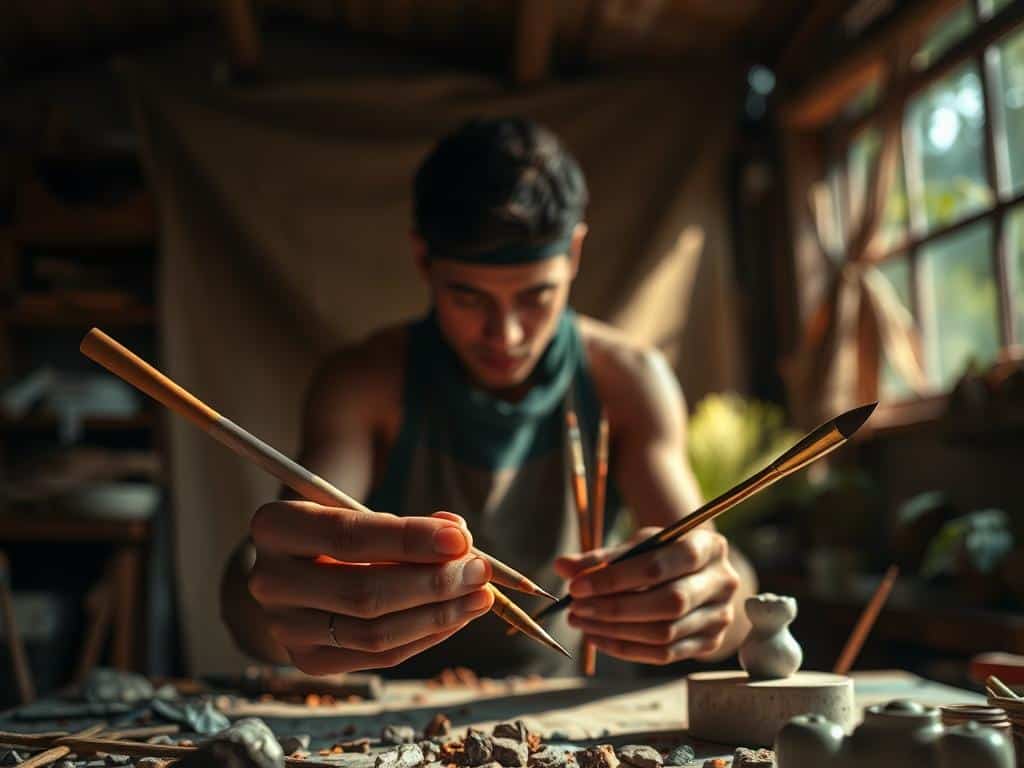
Art made by humans is different from AI creations. It’s not just about looks; it carries deep emotions and cultural meanings. These come from the artist’s life experiences. This mix of personal touch and AI’s lack of it shows why human art is special.
The Emotional and Cultural Significance of Art
Human art touches people deeply. It reflects the artist’s life and the world around them. This connection helps viewers understand and feel empathy, something AI can’t match.
Studies show 70% of art lovers value art that tells a story. This shows how important personal touch is in art.
Individual Expression vs. Algorithmic Creation
Human art stands out because it’s unique. It’s made with feelings, memories, and personal views. This makes art richer and builds a strong bond between artists and their fans.
Research says 90% of art lovers connect more with art made by known artists. This proves the power of personal touch in art.
The Role of Personal Experience in Artistic Creation
Art is shaped by the artist’s life. Every mark on the canvas tells a story. This makes art relatable and engaging, as 65% of viewers find it more interesting.
AI can’t match the emotional depth of human art. It lacks the personal touch and context that make art meaningful.
AI-generated Art vs. Human-Created Art
Exploring AI-generated art versus human-created art shows an interesting side: how people see it. Studies show that many prefer human art because of its beauty, emotion, and effort. This helps us understand the big picture of AI’s place in art.
Comparative Aesthetics: How Audiences Perceive Both Forms
Research shows a clear preference for human art. Art made by humans gets better ratings in many areas. For example, emotional response and storytelling matter a lot.
AI art can be beautiful and pleasing, but it often misses the deeper connection humans bring. This shows that, while both can be stunning, people tend to value human art more.
Factors Influencing Preferences for Human vs. AI Art
How much effort and the story behind art matter a lot. Art that tells a great story or shows a lot of human effort is seen as more beautiful and valuable. People’s feelings about AI also play a part in their opinions.
But, human art’s cultural value and unique qualities are hard for AI to match. As people get used to AI, their views might change, but human art’s specialness remains.
The Role of Effort and Narrative in Art Appraisal
The time and effort put into art greatly affects how it’s seen. Studies confirm that the effort behind a piece boosts its value. Human artists share personal stories in their work, creating a deep connection with viewers.
This emotional bond is key in valuing art, making it hard for AI to match. As art-making changes, the conversation about AI art’s stories and effort grows. It highlights the complexity of how we see art.
Conclusion
Looking back, the growth of AI-generated art marks a big change in how we make art. Today, AI can create art that’s almost as good as human artists. This opens up new possibilities for the future of art.
But, there’s a big difference in the emotional depth and personal touch that human artists bring. AI art lacks the unique feelings and personal touches that make human art special.
The rise of AI art also brings challenges. It could make art cheaper, which might lower the value of human artists’ work. There’s also a worry about copyright issues, as AI learns from other artists’ work.
This could upset the art world, making it harder for human artists to sell their work. It’s a big problem for the art market.
But, I think there’s a way to make AI art and human creativity work together. Instead of replacing human artists, AI can help them make more art. It can even inspire new ideas.
Using AI in art could lead to new and exciting ways of creating. It could change how we see art and what it means to be an artist.