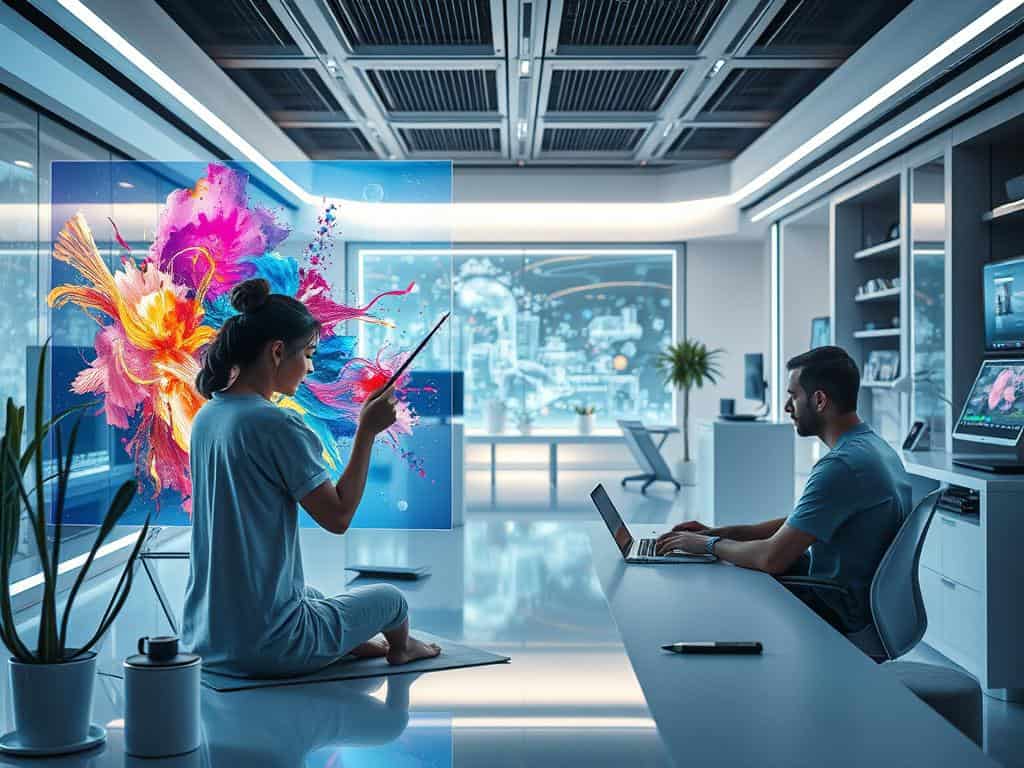
Did you know 49 big news outlets like CNET and Buzzfeed are using AI to write articles? This change shows how much we rely on AI in making content. It makes us wonder if writers and artists will have jobs in the future.
AI can make a lot of content fast, even thousands of articles with the work of one person. But, it also means many jobs are being cut. The world is both excited and worried about AI’s role in creating things.
I’ve used AI to make pictures for kids’ books and write articles. It shows that while AI is good, human touch and feelings are what truly matter. But, AI’s growing role in making content makes us question its value and quality in creative work.
Key Takeaways
- Nearly 50 major news outlets now utilize AI-generated content.
- The production capabilities of AI have skyrocketed, publishing thousands of articles more efficiently.
- Concerns are rising about job displacement in the writing industry due to AI advancements.
- Human creativity and emotional depth remain irreplaceable qualities that AI struggles to replicate.
- Leveraging AI as a collaborative tool can enhance creative processes, not replace them.
The Role of AI in Creative Work
AI has changed the world of creativity, becoming more important in many artistic fields. This change marks a big step in combining technology and creativity. Machine learning can create new ideas, changing how artists and writers work.
The Evolution of AI in the Creative Sector
At first, AI was used little in creative work. But, new machine learning has made AI more useful. Now, AI can look at lots of data to come up with new ideas, helping artists.
Many new platforms and software have come out. They let creators explore new things in AI art. These tools help come up with new ideas, challenge old ways, and show what’s possible.
How AI Tools are Used by Artists and Writers
Artists use AI images as a starting point for their work. They can try out new patterns and ideas. Musicians use AI to make new melodies, opening up music possibilities.
Writers get help from AI text prompts. These prompts can start a writing project. They can even write sentences or paragraphs, helping with writer’s block.
Success Cases of AI in Creative Projects
There are many examples of AI helping in creative projects. A photography contest even chose an AI-made image as the winner. This shows AI can be recognized in creativity.
Companies like Carvana have made over 1.3 million unique videos with AI. This shows AI’s power in marketing. As AI keeps changing creativity, it makes us think about who owns the ideas and how humans and machines work together.
Limitations of AI in Creative Work
Exploring AI’s limits in creative fields shows us that human creativity and emotions are unique. AI can mimic patterns well, but it can’t match the depth of human experiences. This shows why understanding artistic expression is key.
The Importance of Human Creativity and Emotion
In creative writing, human authors offer insights from their personal lives, something AI can’t do. AI can create text, but it lacks real insight and emotional connection. The human touch, with its complex emotions and surprises, is unmatched.
This is also true in music. AI music is seen as lacking the emotional depth that connects with listeners. The rise of AI image generators has also raised questions about the authenticity of AI art. This has sparked worries about the future of artistic jobs.
Quality and Reliability of AI-Generated Content
AI-generated content relies on existing data, which limits its ability to innovate. Research shows AI can help less imaginative writers but often produces similar content. This raises concerns about the uniqueness of literature and the reliability of AI in creative work.
AI’s role in music also has its drawbacks. It tends to stick to popular trends, overlooking lesser-known composers. This shows AI’s limitations in quality and diversity.
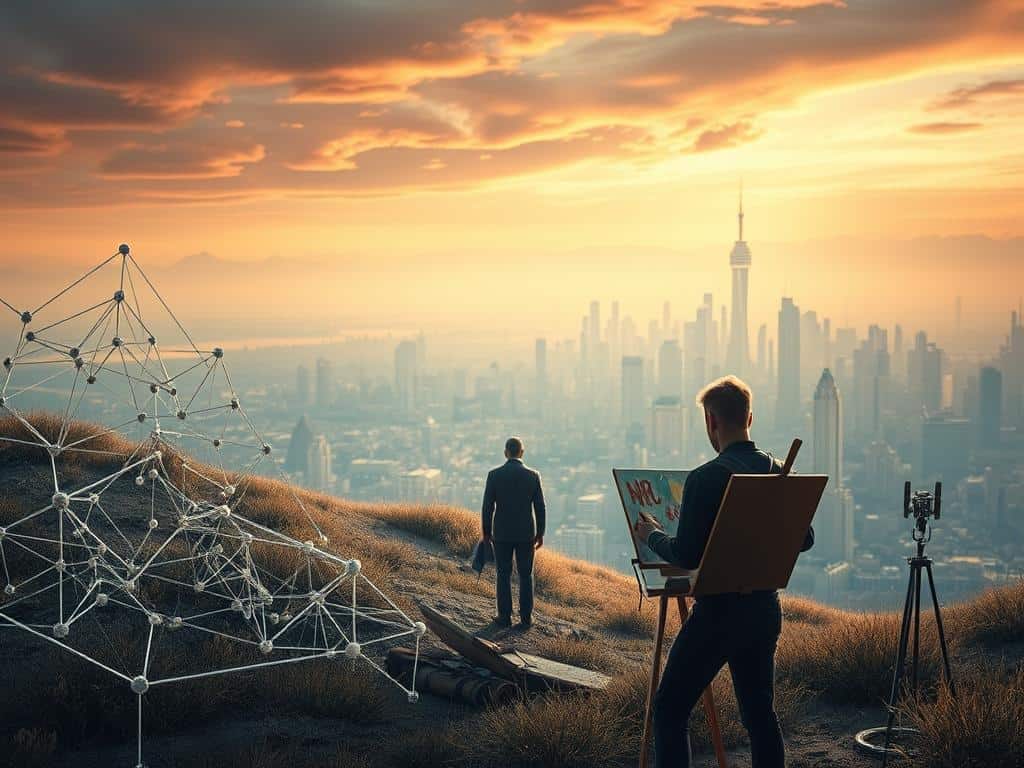
As AI keeps improving, doubts remain about its ability to create original works. Business leaders see AI as a tool to boost innovation. Yet, relying on AI raises concerns about the authenticity and originality of creative output.
Conclusion
Reflecting on AI in creative work, it’s clear AI can change how we make art and work. Already, 83% of creative folks use AI tools in their work. This shows AI is becoming a big part of making things.
AI helps companies be more creative, up to 26% better. This means the future of making things will mix human ideas with AI’s speed. It’s a team effort.
The debate between human and AI might worry some about their jobs. But AI is meant to help, not replace us. It makes some tasks 20% faster and ideas 40-50% quicker.
Even with AI, we need our touch and feelings in art. Studies say 26% of tasks might get automated, but we’re needed for the special stuff. Our creativity is unique and can’t be replaced.
We should all get used to AI and new jobs like AI-Creative Director. AI does the easy stuff, so we can do the fun stuff. This way, we keep making new and exciting things.
Art will always need a human touch. It’s what makes it deep and meaningful. So, let’s keep being creative and embracing AI’s help.