Did you know smart fridges can cost 20% to 100% more than regular ones? Prices range from $1,699 to $7,999. This big price jump makes me wonder: are they worth it for my kitchen?
As tech gets better, smart fridges bring Wi-Fi and food management systems. These could change how I keep food fresh. But, I need to think about the pros and cons before buying. With more people investing in smart appliances, am I ready to join them?
Key Takeaways
- Smart fridges can make your kitchen more efficient and convenient.
- They offer various features and prices to fit different needs.
- Being energy-efficient can lower your household’s energy use.
- Advanced tech might mean higher repair costs and longevity issues.
- Tracking food can help cut down on waste and keep food fresh longer.
Understanding Smart Fridges and Their Features
In recent years, smart fridges have become more advanced. They are now internet-connected refrigerators with new features. These features make kitchen work easier and more efficient.
Thanks to IoT, sensors, and AI, these fridges can track food and update users in real-time. This is a big step forward in appliance technology.
What is a Smart Fridge?
A smart fridge connects to your home internet. This gives you more control than old fridges. LG introduced the first smart fridge in the early 2000s.
These fridges have Wi-Fi, so you can control them with your phone or tablet. They also work well with other smart home devices, thanks to Matter 1.2 certification.
Key Features of Smart Refrigerators
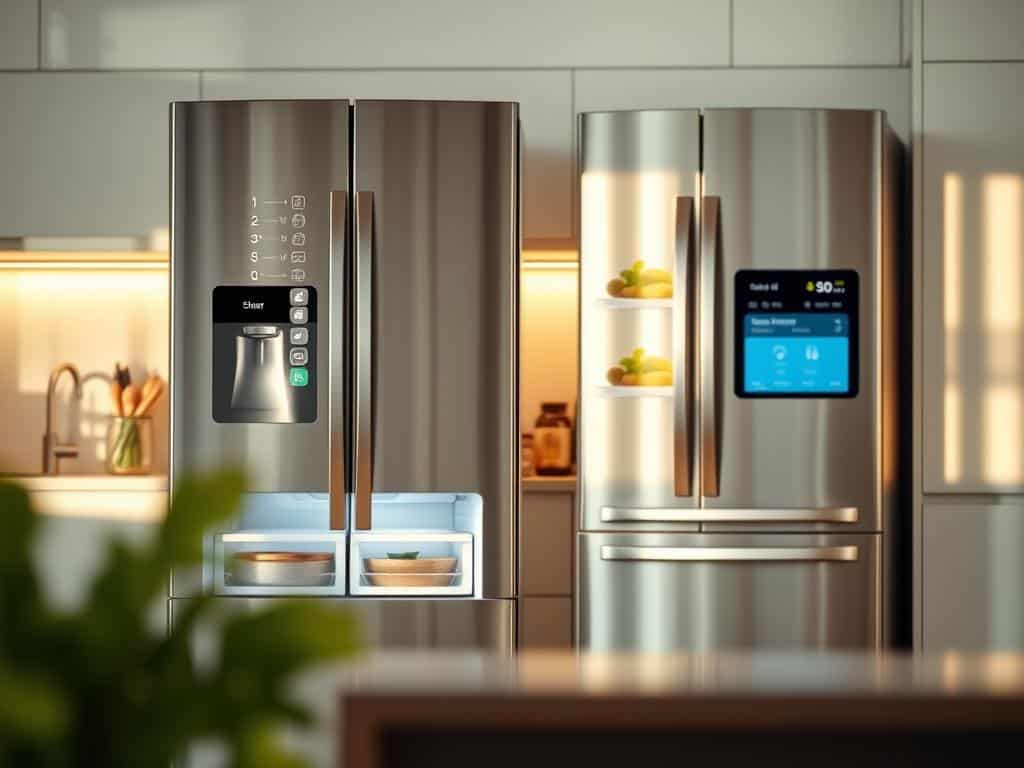
Smart fridges come with cool features for today’s homes. They have touchscreen interfaces for easy use. Interior cameras show what’s inside, helping with meal planning and shopping.
They also sync shopping lists with your phone in real-time. You can find recipes, browse the web, and even leave notes on a virtual whiteboard.
These fridges can track what you have and remind you when things expire. This helps reduce food waste. Samsung’s Bespoke Family Hub fridge is a great example, with its big screen and AI tech.
Advantages of Investing in Smart Fridges
Smart fridges bring many benefits to my home and lifestyle. They combine technology with better appliance performance. This leads to energy savings, better food management, and more convenience. Here are some key advantages I’ve noticed.
Energy Efficiency
Smart fridges are great at saving energy. They use up to 15% less power than old models. This means big savings on my electricity bills over time.
They also have smart temperature control. This helps use energy wisely based on how I store food.
Enhanced Food Management
Smart fridges are also good at managing food. They track expiration dates and keep an eye on what’s inside. This cuts down food waste by a lot.
Using a smart fridge can even save me 20% on grocery bills. It helps me plan better and avoid throwing away food.
Convenience of Touchscreens
Smart fridges also make life easier. Their touchscreens let me check info, set reminders, and control the fridge from my phone. Voice controls make it even easier to use without getting your hands dirty.

Challenges and Concerns of Smart Fridges
Smart fridges are becoming more popular, but they come with challenges. They offer many benefits but also have issues like high prices and security concerns. These factors make people think twice before buying.
High Upfront Costs
One big issue is the high cost of smart fridges. They can cost over $1,500, which is much more than traditional fridges starting at $500. This price difference makes many people question if the benefits are worth it.
Potential Security Risks
Privacy and security are major concerns with smart appliances. About 50% of smart device owners worry about their data. Tests by Consumer Reports have shown that smart fridges can be vulnerable to hacking.
Longevity and Reliability Issues
Smart fridges may not last as long as expected. They have a similar lifespan to traditional fridges, but their complex technology can cause problems. Around 30% of owners face issues with software or connectivity.
Conclusion
Looking back at smart fridges, they bring many benefits to the kitchen. Features like energy saving, managing food, and smartphone control make them a good choice. They help track when food expires and keep grocery lists, cutting down on waste and saving money.
But, buying a smart fridge is a big decision. The cost, security risks, and need for internet are important to think about. For those who are not tech-savvy, like older people, these fridges might be hard to use.
So, if you’re thinking about getting a smart fridge, consider what you need. This way, your kitchen tech investment will meet your goals for ease and efficiency. A smart fridge is more than just a gadget; it’s a game-changer for kitchen management.