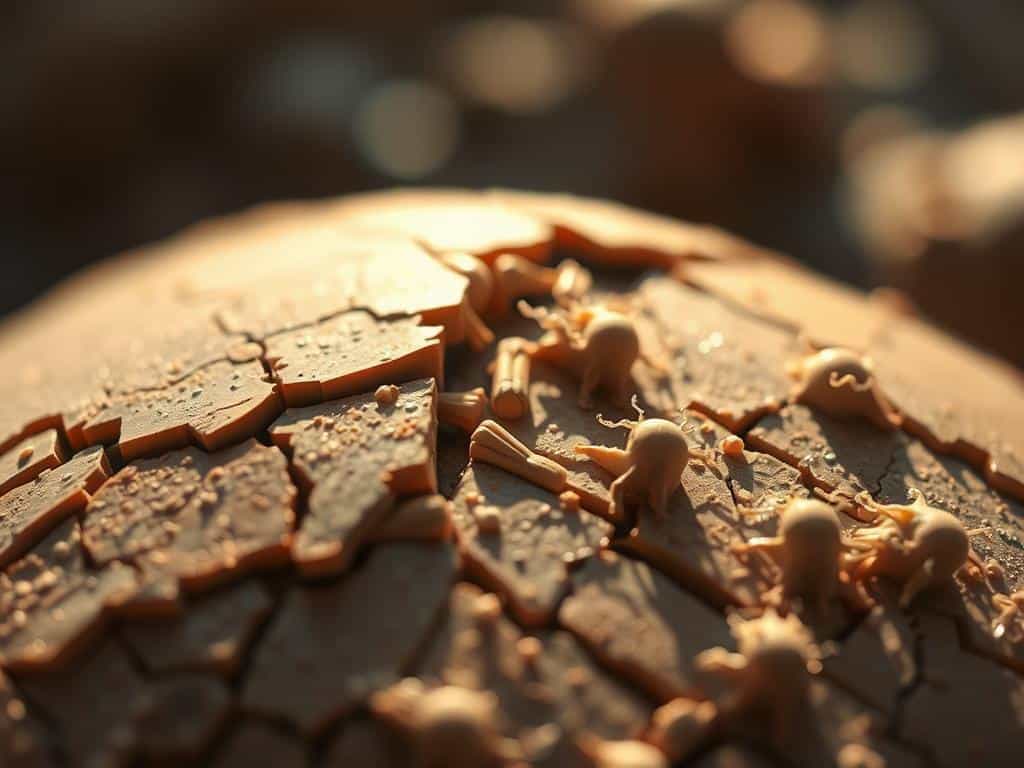
Did you know ancient Roman lime mortar has lasted nearly 1,900 years? It shows the power of self-healing materials. Today, we’re seeing big steps in material science.
These new materials are not just durable. They also help the environment. They’re changing industries like construction and healthcare. Imagine products that fix themselves like our skin.
Key Takeaways
- Self-healing materials can reduce costs associated with material failure.
- Dynamic polymers can stretch significantly while maintaining their structure.
- Research into self-healing materials dates back over 50 years.
- Self-healing systems can operate without external catalysts.
- Self-repairing materials are being integrated into various fields, including electronics and textiles.
- Vitrimers represent a promising approach for applications in medicine.
The Rise of Self-Repairing Materials
Self-repairing materials are changing the game in material science. They combine new ideas with green solutions. These materials can fix themselves, just like nature does over billions of years.
Thanks to nanotech, we’re seeing big steps forward. Self-healing materials are now used in many areas.
Introduction to Self-Healing Concepts
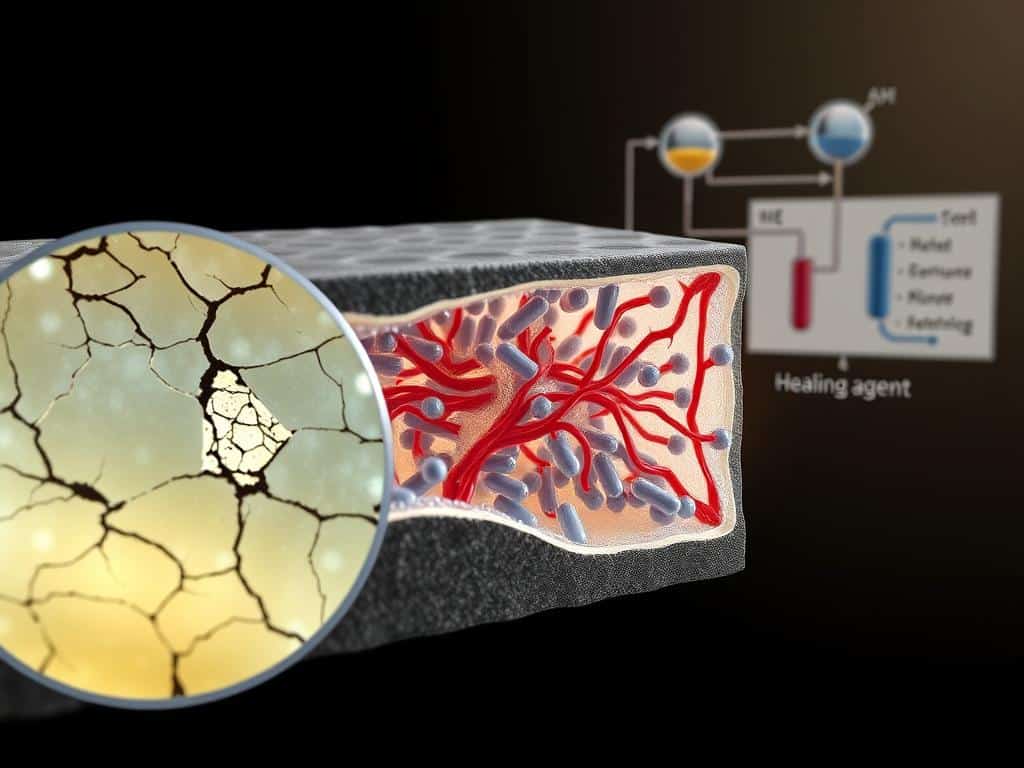
These materials can fix themselves without help. They’re great for building things that last longer. They use special ways to heal when damaged.
For example, some materials have tiny capsules that burst to fix the damage. This could save a lot of money on upkeep. Studies say it could cut maintenance costs by up to 30%.
The Evolution of Material Science
Material science is now all about making things that last and can fix themselves. Scientists have made self-healing concrete that fixes cracks up to 0.5 mm. This is a big deal for keeping things strong and lasting longer.
Also, some polymers can get back almost 90% of their strength after being damaged. NASA even made a material that seals itself after being hit by a bullet. It’s amazing how fast it can recover.
The market for self-healing materials is growing fast, at 20% each year from 2023 to 2030. It’s exciting to see how these advancements will change many industries. They promise better performance and help the environment too.
How Do Self-Repairing Materials Work?
The world of self-repairing materials is full of advanced techniques. These mimic nature’s self-healing processes. They use various methods to last longer and reduce waste.
Mechanisms Behind Self-Healing
These materials use special bonds to heal when damaged. For example, hydrogen bonds are very strong. They help materials recover their strength over time.
Light or heat can speed up the healing process. Some materials can even repair themselves quickly with UV light. This makes them very adaptable.
Environmental Benefits
These materials are good for the environment too. They last longer, which means less waste and lower costs. They’re a step towards a greener future.
Applications of Self-Repairing Materials
Self-healing materials are changing many fields, showing a bright future. They are used in fashion, infrastructure, electronics, and healthcare. This change brings new ways to make things last longer and work better.
Fashion and Textiles
Fashion is getting a boost from self-healing materials. Now, clothes can fix small tears and last longer. This means less waste and a greener way to shop.
Infrastructure Innovations
Self-healing materials are making buildings last longer. Scientists have made concrete that fixes cracks and keeps water out. This saves money and makes buildings safer and stronger.
Electronics and Healthcare
In electronics, self-healing materials make gadgets more reliable. They fix small damages, making devices last longer. In healthcare, they could make bandages and implants better. This could lead to better care and new medical tools.
Conclusion
Looking ahead, self-repairing materials are set to change many fields. They bring together sustainability and durability, opening new doors in construction, fashion, and tech. The latest research shows big steps forward, like a 93% healing rate in certain glass fibers.
This progress is exciting for construction. Self-healing concrete could last longer, healing up to 71.8% of its strength. In manufacturing, new composites might regain up to 97% of their original strength. These breakthroughs could lead to stronger, more efficient products.
Despite the hurdles of cost and wider use, ongoing research is promising. As we learn more about these materials, I believe they will soon be part of our daily lives. They could revolutionize how we design and build things, making a big impact on our world.