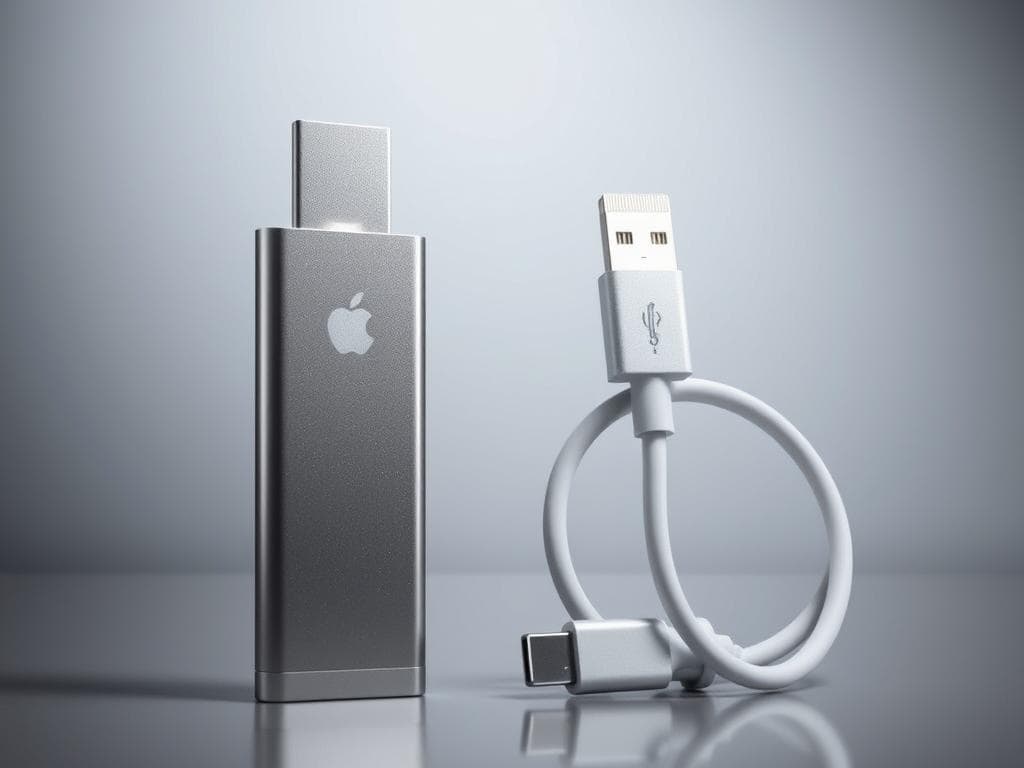
Did you know USB-C can reach speeds of up to 40Gbps? Lightning connectors, on the other hand, top out at 480Mbps. As we explore the tech world, knowing the difference between USB-C and Lightning is key. The fight over which one will win is changing how we charge and transfer data.
Apple’s move to USB-C in the iPhone 15 has sparked debate. People wonder which option meets their needs now and in the future. It’s a question that affects our daily tech use.
Key Takeaways
- USB-C offers significantly faster data transfer rates compared to Lightning, reaching up to 40Gbps.
- Lightning’s maximum data transfer speed is limited to 480Mbps, which is much slower than USB-C.
- USB-C supports Power Delivery for faster charging, while Lightning has limited fast charging capabilities.
- The adoption of USB-C is influenced by regulatory changes, including a European mandate for universal charging standards.
- USB-C accessories are widely available from multiple manufacturers, often at lower prices.
Understanding the Basics of USB-C and Lightning
Knowing about connectors is key for devices to work well together. The USB-C and Lightning connectors are important for moving data and charging gadgets. Each connector has special features that meet different needs, shaping what users like.
Key Differences Between the Two Connectors
The USB-C connector is known for its fast speeds. It can transfer data at 640 Mbps, following the USB 3.0 standard. This makes it great for moving data quickly between devices.
The Lightning connector, on the other hand, has a slower data transfer rate of 480 Mbps. This is because it follows the older USB 2.0 standard. This shows how USB-C has improved to meet today’s needs.
When it comes to charging, the Lightning connector can charge up to 20W. This means you can charge an iPhone half way in about 30 minutes. But, the USB-C connector can charge up to 240W, making it better for charging laptops and tablets.
The Role of Proprietary Technology in Apple Devices
Proprietary technology is key in the world of connectors. The Lightning connector is only for Apple devices, like iPhones and iPads. This makes it easy for Apple users but limits use with other products.
The USB-C connector, on the other hand, is used by many manufacturers. It’s now found in newer iPhones, showing it’s becoming more common. This shift shows USB-C might soon be the go-to connector for everyone, thanks to its flexibility and speed.
USB-C vs Lightning: Speed and Performance
Choosing between USB-C and Lightning means looking at their speed and performance. They both have their own strengths in data transfer and charging. Let’s compare them to see who comes out on top.
Data Transfer Speeds: A Comparative Analysis
USB-C is way faster than Lightning when it comes to data transfer. It can handle up to 40 Gbps, thanks to the latest USB4 standard. On the other hand, Lightning tops out at 480 Mbps, which is much slower.
Even the faster Pro models of iPhones can only go up to 10 Gbps. This shows how important fast data transfer is in today’s tech world.
Fast Charging Capabilities of Each Connector
Fast charging is key for daily use. USB-C is a clear winner here, with speeds that can charge devices quickly. Lightning can charge too, but it’s not as fast.
Using a USB-C to Lightning cable can charge an iPhone up to 50% in 30 minutes. This is thanks to USB-C’s ability to handle more power. It’s also great for charging other devices, not just phones.
Durability and Usability: Which Connector Lasts Longer?
Looking at cable lifespan and usability, it’s key to know the differences between USB-C and Lightning cables. Each has its own good points and areas for improvement. These factors can impact how long a cable lasts and how easy it is to use.
Comparing the Lifespan of USB-C and Lightning Cables
Comparing USB-C and Lightning cables shows how they hold up over time. Lightning cables are known for lasting over 10,000 insertions without breaking. This makes them very durable.
USB-C, while it may wear out, is getting more popular. It’s versatile and works with many devices. It also supports fast data transfer and high power delivery, making it last longer in tough situations.
User Experience: Ease of Connection and Compatibility
The way users feel about these connectors is very important. Both USB-C and Lightning cables are easy to use because they can be inserted either way. In my experience, Lightning cables connect tighter and feel more stable.
But, some people think they might break more easily than USB-C. USB-C is more compatible with Android phones and laptops. This makes it easier to use with different devices. As more devices use USB-C, connecting gadgets becomes smoother, reducing frustration.
Conclusion
We are at a key moment where old tech meets new innovation. Apple’s Lightning connector has been around for over 10 years. Now, it faces competition from USB-C, which is becoming more popular.
USB-C can go up to 40Gbps and deliver up to 100W of power. This makes it a top choice in today’s tech world. More companies are using USB-C, making it work with many devices like laptops and Android phones.
This is great for those looking for charging cables that will last. The European Union is pushing for universal charging, which favors USB-C. This shows a big shift towards USB-C’s wider use.
If you’re thinking about your charging needs, USB-C seems to be the better choice. Moving to new standards means better compatibility and being ready for future tech advancements.