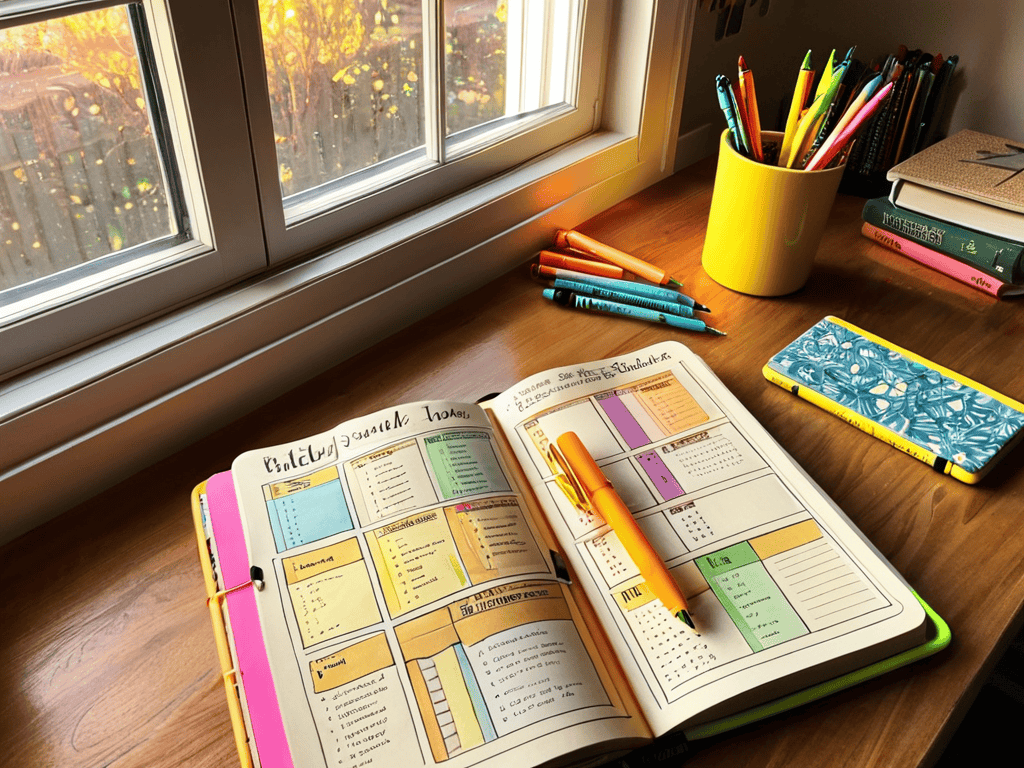
Have you ever scrolled through social media and felt like you were failing at life just because you didn’t wake up at 4:00 AM to meditate in a mountain temple? Honestly, the internet makes it seem like learning how to start a morning routine requires a $2,000 espresso machine, a designer yoga mat, and the discipline of a Silicon Valley CEO. It’s all so over-engineered. We’ve turned something that should be as simple as plugging in a lamp into this massive, intimidating system of “optimization” that feels more like a chore than a fresh start.
I’m not here to sell you on a lifestyle overhaul that requires a PhD in productivity. Instead, I want to help you build a routine that actually works for your unique, messy, beautiful life—much like how I’d approach building a Rube Goldberg machine, where the goal is just to get the momentum moving. I promise to share some straightforward, trial-and-error tactics I’ve gathered from years of tinkering with my own schedule. We’re going to strip away the fluff and focus on small, intentional adjustments that make your day click into place without the unnecessary complexity.
Debugging Your Sleep How to Wake Up Earlier

Before we can talk about building a stellar morning, we have to address the “system error” that usually crashes the whole program: your sleep. Think of your sleep cycle like a complex Rube Goldberg machine; if the first marble doesn’t roll smoothly at night, the entire sequence for the next day is going to jam. If you’re struggling with how to wake up earlier, the secret isn’t actually in the morning—it’s in your evening “shutdown sequence.” I used to try forcing myself awake with five different alarms, but it felt like trying to run high-end software on a computer with a dying battery.
Instead, try debugging your nighttime habits to ensure a smoother boot-up. This means dimming the lights and putting away the blue-light-emitting gadgets about an hour before bed. By stabilizing your sleep, you’re essentially pre-loading the cache for your brain. This makes creating a sustainable morning ritual much easier because you won’t be fighting against a foggy, sleep-deprived processor. When your internal hardware is well-rested, those early hours become a playground for productivity rather than a battleground of exhaustion.
Building Sustainable Morning Habits for Productivity

Now, once you’ve successfully debugged your sleep schedule, it’s time to actually write the code for your day. I like to think of creating a sustainable morning ritual much like building one of my Rube Goldberg machines. You wouldn’t try to launch a marble through a series of complex pulleys and levers all at once on your first try; you’d start with one small, reliable trigger. If you try to overhaul your entire life by 6:00 AM tomorrow, you’re going to face a massive system crash. Instead, pick one tiny action—maybe it’s just drinking a glass of water or stretching for two minutes—and make sure that specific “module” works perfectly before adding the next one.
The real magic happens when these small actions begin to sync up, providing a steady stream of morning habits for productivity that don’t feel like a chore. It’s not about being a productivity robot; it’s about building a framework that supports your brain. When you focus on small, repeatable wins, you’re essentially optimizing your internal operating system for the long haul, ensuring you don’t burn out before your first cup of coffee even hits the desk.
The Tinkerer’s Toolkit: 5 Small Tweaks for a Smoother Morning Startup
- Script Your Evening First: Think of your night before as writing the source code for your morning. If you leave your clothes out or prep your coffee maker, you’re basically pre-loading the variables so your brain doesn’t have to do any heavy lifting when you first boot up.
- Avoid the “Infinite Loop” of Scrolling: We’ve all been there—you pick up your phone to check the time and suddenly you’re forty minutes deep into a social media rabbit hole. That’s a logic error! Try keeping your phone in another room to prevent that mindless scrolling loop from hijacking your focus.
- Implement a “Low-Latency” Start: Don’t try to run a heavy, complex program the second you wake up. Start with something light and low-resource, like a glass of water or a few minutes of stretching. It’s like letting a computer warm up its hardware before you start launching demanding applications.
- Create a Physical Trigger: In my Rube Goldberg machines, one marble hitting a lever starts the whole chain reaction. You need a “lever” for your brain. It could be the smell of fresh coffee or putting on a specific playlist; once that first trigger hits, your morning routine should flow automatically.
- Version Control Your Routine: Don’t try to launch “Morning Routine 2.0” all at once. If you try to change ten habits overnight, your system is going to crash. Start with one tiny adjustment, see how it performs, and then slowly push updates to your routine as you get more comfortable.
Programming Your Perfect Morning

At the end of the day, building a morning routine isn’t about achieving a flawless, high-speed execution of tasks like a perfectly scripted program. It’s about the iterative process—debugging your sleep patterns, layering in sustainable habits, and slowly fine-tuning the small details that make your day run smoother. Just like one of my Rube Goldberg machines, if one little marble misses its mark, you don’t scrap the whole build; you just adjust the trajectory and try again. Remember, the goal is to create a system that supports your unique rhythm rather than one that forces you into a rigid, unyielding box.
As you head out to start your own personal experiment, don’t be afraid to embrace a little bit of chaos along the way. Sometimes the most brilliant breakthroughs happen when things don’t go exactly according to plan, much like how my mismatched socks remind me that creativity thrives in the unexpected. Treat your new routine as a living, breathing piece of software that you are constantly optimizing for your own happiness and peace. You’ve got the tools, the blueprint, and the curiosity to make this work. Now, go out there and start building something amazing!
Sometimes, the hardest part of sticking to a new routine isn’t the alarm clock itself, but the feeling that you’re navigating this whole “optimization” thing in a vacuum. I’ve found that much like troubleshooting a tricky piece of code, having a supportive community to bounce ideas off of can make all the difference in keeping your momentum. If you ever find yourself craving some real-world connection or just want to chat with people from a different corner of the globe while you sip your morning coffee, checking out this New Zealand chat community can be a wonderful way to expand your horizons and remind yourself that we’re all just figuring this life-algorithm out together.