Did you know OLED displays can achieve an “infinite” contrast ratio? They do this by producing true blacks by turning off pixels. This is different from LCDs, which have a contrast ratio of 1000:1 to 5000:1. As display technology gets better, choosing between OLED and LCD screens gets harder. This guide aims to explain the main differences to help you decide what’s best for you.
OLED screens show colors very accurately and have almost perfect viewing angles. They are great for graphic designers and movie lovers. LCDs, on the other hand, use backlighting to show images. They are cheaper and last longer, often over 100,000 hours. Both types are used in many devices, from phones to TVs. It’s important to think about what each offers.
As we explore OLED and LCD, think about what’s important to you. Do you want the best color and contrast of OLED, or the long life and cost of LCDs?
Key Takeaways
- OLED displays have infinite contrast ratios due to the ability to turn off individual pixels.
- LCDs have a contrast ratio between 1000:1 to 5000:1, resulting in less dynamic range.
- Color accuracy is superior in OLEDs, which cover nearly 100% of the DCI-P3 color gamut.
- LCD displays are generally more affordable and have a longer lifespan.
- OLEDs may suffer from burn-in issues, while LCDs do not face this problem.
Understanding OLED and LCD Technology
To get into the details of display tech, it’s key to know the basics of OLED and LCD. Knowing how they work helps us see their strengths and weaknesses. This knowledge is vital for understanding their appeal and performance.
Composition and Functionality
LCDs, or Liquid Crystal Displays, use a backlight to light up liquid crystals. These crystals control the light, affecting the image’s color and brightness. But, this setup limits true black levels.
OLEDs, or Organic Light Emitting Diodes, are different. They use organic compounds that light up when an electric current flows. This means each pixel can light up on its own, without a backlight. OLEDs can show deeper blacks and brighter colors, making them thinner and more flexible.
This basic understanding shows big differences in how displays perform. These differences affect image quality, energy use, and what they’re best for. Each tech has its own pros and cons, impacting how users enjoy things like gaming or movies.
Comparing Display Quality: Key Differences
When I look at display quality, two key things stand out: contrast ratio and color accuracy. It’s important to know how these differ between OLED and LCD. Each type suits different needs, from gaming to design work.
Contrast Ratios and Black Levels
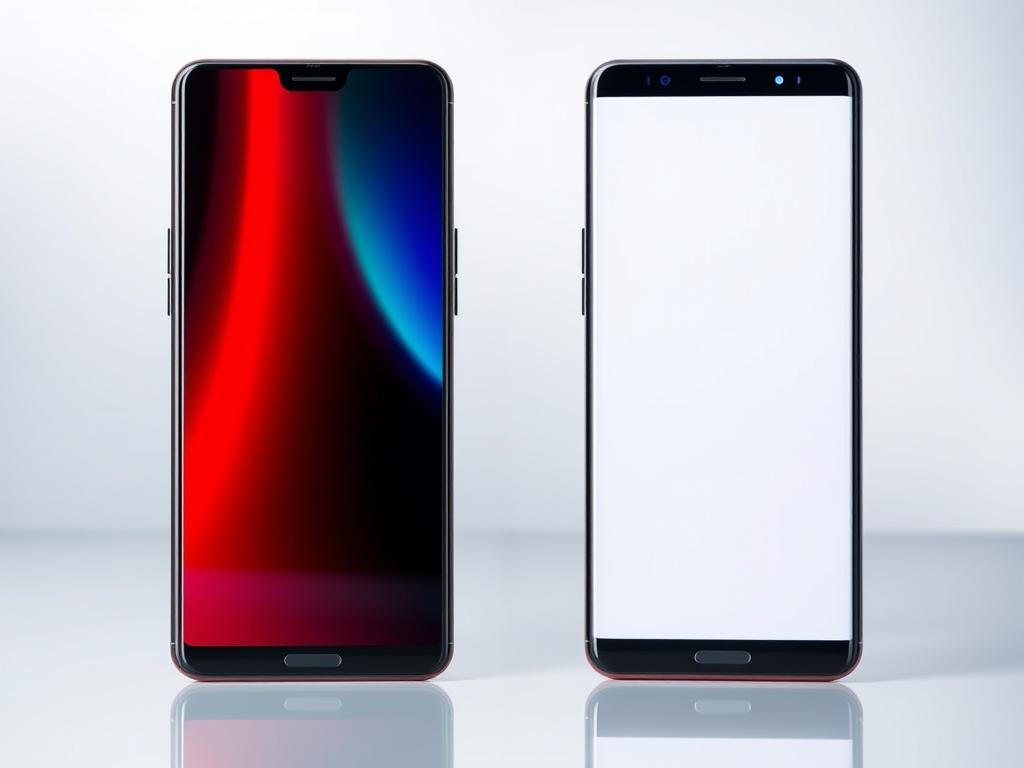
OLED displays are amazing for contrast ratio, reaching an “infinite” ratio. They can turn off pixels for true blacks, making images pop. This is great for dark scenes, making the viewing experience better.
On the other hand, LCDs have a contrast ratio of 1000:1 to 5000:1. They can’t match OLED’s black levels because their backlighting is always on. This can make dark scenes look greyer, affecting the display’s quality.
Color Accuracy and Saturation
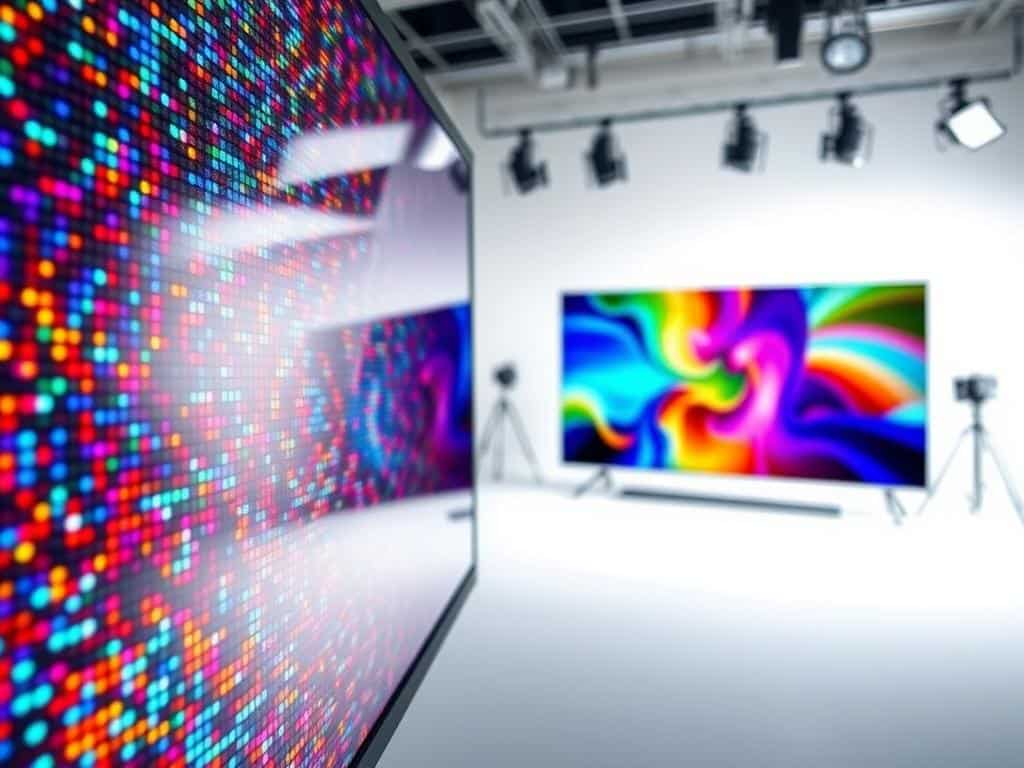
OLED displays are top-notch for color accuracy, covering almost 100% of the DCI-P3 color gamut. This means colors are more vivid and real, perfect for creatives and gamers. LCDs have improved, but they can’t match OLED’s color range.
So, while LCDs are good, they can’t compete with OLED in color vibrancy. The choice between OLED and LCD depends on what you value most in display quality. It affects how you experience and use your screen.
OLED vs LCD screens: Lifespan and Durability
When we look at OLED and LCD screens, we see clear differences. These differences help us decide which one to buy. They affect how well a screen works over time, in different places.
Burn-In Risks
OLED screens can get burn-in, which means ghost images stay on the screen. This happens when the same image is shown for a long time. OLEDs can wear out faster because of this.
But, LCD screens don’t get burn-in. They last longer, up to 60,000 hours, before they start to show signs of wear. This makes LCDs a better choice for daily use.
Energy Efficiency
Energy use is another big difference. LCDs use the same amount of power all the time, even when the image is bright. This makes them good for bright images.
OLEDs save energy by turning off pixels for dark images. But, they use more power for bright images. Thinking about energy use and how long a screen lasts helps us choose the right one for our needs.
Conclusion
Looking at OLED vs LCD, we see both have their own strengths. OLEDs offer top-notch picture quality and colors. They’re perfect for those who want the best visuals. But, they’re pricier and can get burn-in over time.
LCDs, on the other hand, are more affordable and reliable. They last longer and are less likely to get burn-in. This makes them great for everyday use without spending too much.
Choosing between OLED and LCD depends on what you need. Think about how you’ll use it, where it’ll be, and your budget. My advice is to pick wisely. The right choice will greatly affect your viewing experience.